How long does it take to balance your hormones
Hormone balancing is as popular as ever as a topic. I think that comes from a combination of different factors, like less stigma around talking about our cycle to cycle irregularities becoming more common.
And while I do love that more people are becoming aware of how important their cycle is to their health, a lot of information that gets reshared and spread is very surface level or not very accurate.
So let’s go over some things that I think everyone should know about their cycle. Because at the end of the day what learning about your own cycle leads to is body literacy. Body literacy being the ability to know and understand your cycle. This is huge when it comes to addressing YOUR own cycle irregularities.
So how long does it take to balance your hormones?
To answer this question we need to go over some anatomy first. Specifically our hormonal cycle.
Menstrual phase
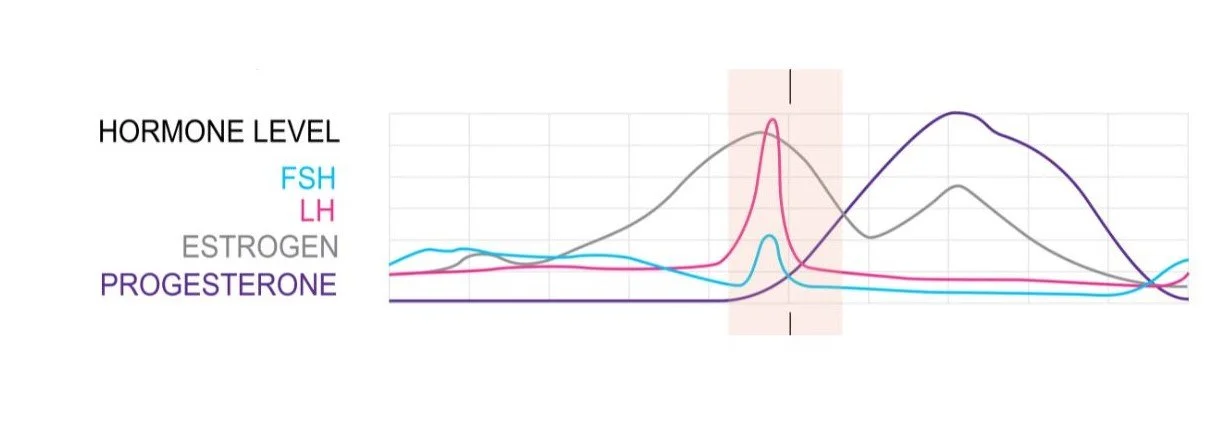
The beginning of the cycle is the one we’re most familiar with, our period. Our period is the time when the uterine lining is being shed. During this time our hormones, estrogen and progesterone are at their lowest.
Follicular phase
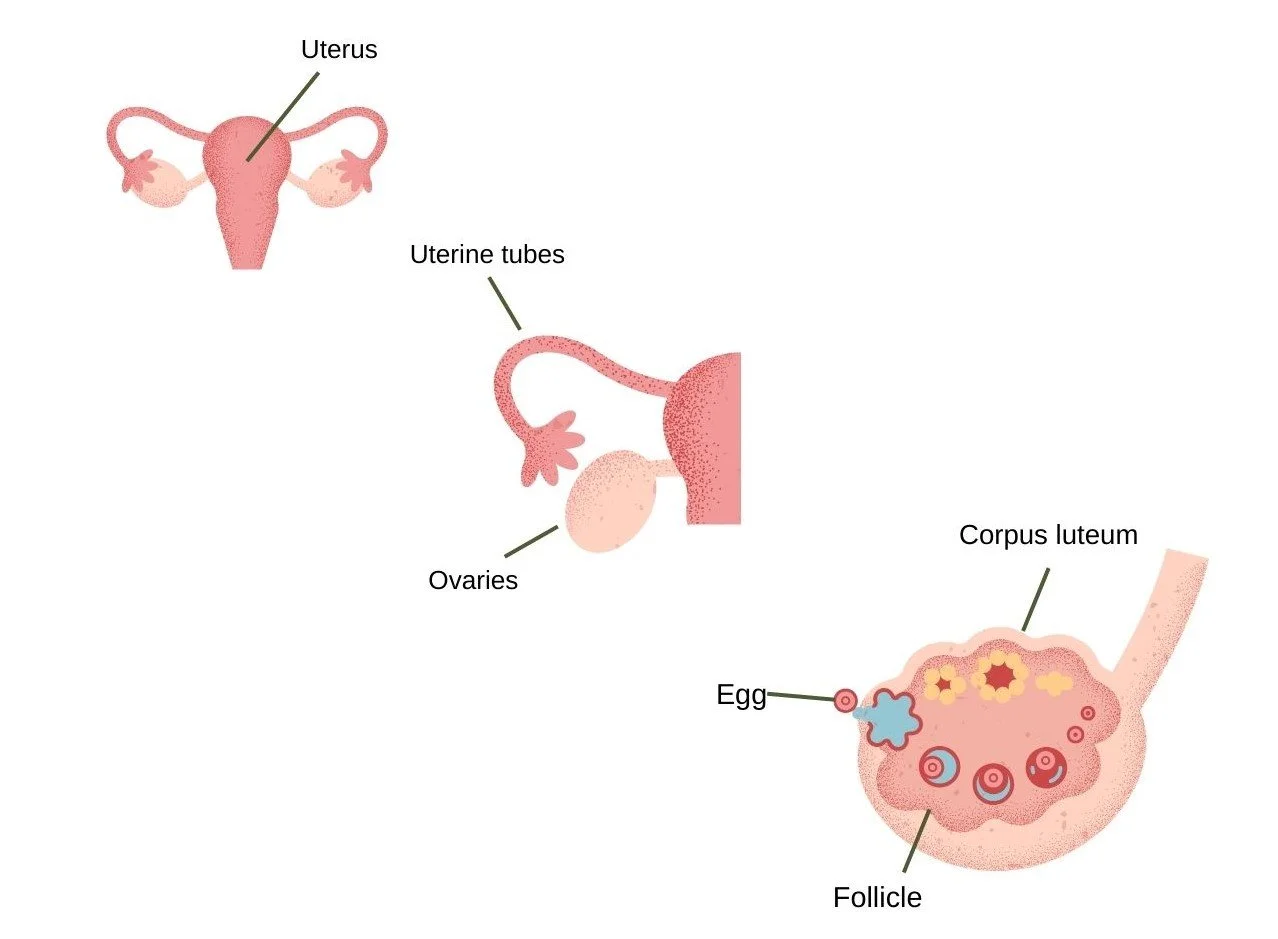
The follicular phase technically starts at the same time as our menstrual phase. Once menstruation has ended the ovaries start to get signals from the brain to start to produce estrogen. This is done through a hormone called FSH (follicular stimulating hormone). That’s when a group of follicles in our ovaries start to develop and produce estrogen. As they continue to develop, estrogen levels continue to rise.
Ovulation phase
During ovulation there is a chosen egg, the one that has matured the most, that gets ready to be released. The brain sends down more of the signaling hormones FSH and a new one LH (Luteinizing hormone) for ovulation to occur. We do naturally produce testosterone that also increases for ovulation. Once estrogen reaches a threshold there is an immune interaction that helps the egg rupture out of the ovary. Once the egg has ruptured it hangs out for up to 24 hours after which it gets reabsorbed.
Luteal phase
The follicle that is left behind then turns into a gland called the Corpus Luteum. This gland is then what produces progesterone and a small amount of estrogen. It will continue to produce progesterone for up to 16 days, in which it will break down and get reabsorbed. Once progesterone drops it triggers your next bleed to start and the cycle begins again.
Key things to notice:
In the follicular phase the main hormone is estrogen.
Estrogen is made by a handful of follicles that are developing
In the luteal phase the main hormone is progesterone.
Progesterone is made only when ovulation occurs and a new gland is formed called the corpus luteum.
What even is balanced hormones?
Before we continue I want to touch on what balanced hormones even means.
Because the name makes it sound like we want our hormones estrogen and progesterone to be equal. Which isn’t the case at all because we naturally make up to 20x more progesterone than we do estrogen (1).
So then what does balanced hormones mean?
It refers to the length of time we are producing estrogen to be more or less equal to when we produce progesterone. Those being 12-16 days per phase.
That gives enough time for our body to also have the benefits of these important hormones. Like their impacts on our bone, cardiovascular, and mental health.
The key to hormonal balance is in the ovaries
During the follicular phase a handful of follicles will start to develop, they start to produce estrogen. Along the way there will be a choosen one, the egg that will ovulate. The rest of the follicles will stop developing and wait their turn.
The time it takes for the follicle to start developing all the way to ovulation is about 3 cycles.
Which means that what we are doing right now is impacting the cycle we will experience 3 cycles from now.
What we’re eating, how regulated our nervous system is, supplements/herbs we take, etc. we won’t know the full impact of them for 3 cycles.
Which is great to know because I don’t know about you but when I was trying to get rid of my hormonal acne I would jump from one supplement to the next every few weeks. The same would go for herbs. I studied enough herbalism to know what herbs would be helpful, but I didn’t understand my own biology to know that supporting my hormones would take time.
Hormones are like onions
They have layers
So now that we know that on average it will take 3 cycles to support our hormones. Let add in another layer which is our individuality.
In our hyper capitalistic society that pushes to be productive at all costs, it can be easy to not realize we are burnt out. With so much information overload when it comes to what we should eat it can be easy to overthink food and miss some of the building blocks that we need to create our hormones in the first place (that building block being cholesterol aka fats).
These things can take a toll on our hormones over many months to usually years. Which means that it will take some time for our cycle to correct itself. So have patience. Below I will go over some basic things that you can do to support your hormonal health
Final layer, which is nuance and context
Our biology is intelligent. If we get sick, are traveling, have deadlines or finals then our hormones can take the back seat to things like adrenaline and cortisol.
Which makes total sense because if our body senses that we are in a high stress situation, it should move resources to make sure we are able to keep up with whatever the situation is. The problem comes in when we jump from one stressful event to the next without prioritizing our own mental and physical well being.
So if your cycle or period gets a bit weird think back the last 3 cycles to see if there are any clues into what could have caused your hormones to get side tracked. And know that its perfectly normal and ok to have an odd cycle once in a while.
How to support your hormonal health
Now that we’ve talked about how balancing your hormones can take time lets talk about some broad lifestyle habits that can help support our hormonal health.
Focus on eating enough
Which I know can sound weird because most of the time we hear about people over eating. But when we focus on cooking meals at home and minimizing overprocessed food, it makes it hard to over eat. This is especially the case when we talk about adding in regular movement and exercise. So try to make meals at home as much as possible with seasonal ingredients. A good tip is buying frozen veggies. They tend to be cheaper and they won’t go bad as fast.
Movement
I’m sure you’ve heard about how important movement is to our general health. I would go a step further and say if you have a menstrual cycle its even more important. It helps bring blood flow to the pelvis which can help with painful cramps by supporting the smooth muscle that make up the uterus (2). Exercise, specifically weight baring exercises are key in minimizing bone loss as we age (which sounds like something to deal with when we’re old but if you have cycle irregularities like estrogen dominance, more time is spent breaking bone down vs building it back up). (3)
Stress management
When I get asked what’s the most common hormone disruptor the first thing I think of is chronic stress. Stress itself isn’t the problem, we need it to wake up in the morning, and it keeps us safe and alert. The problem is when we are always in a state of hyper arousal. Everything is important, deadlines, notifications, access to more information and content then we could ever begin to process in a given day. This hyper arousal state tells our body that we need more adrenalin more cortisol (stress hormone). So it will bypass creating our hormones to make sure we can keep up with the demand. Thats why having a stress management practice is huge for our health. Finding activities that help us be in the moment. Minimizing the amount of information that we get exposed to. Especially ones that play on our emotions like anger and fear.
I could go over more like sleep and endocrine disruptors, but I find that these are the main big ones that can make the most difference in supporting our hormonal health.
The last big recommendation I’ll leave you with, is learn how to track your cycle. The way we can see how long we are in our follicular phase vs our luteal phase is by tracking. Seeing IF ovulation is occurring, which remember ovulation is how we enter the luteal phase and get progesterone. Ovulation is tricky because we might not be ovulating even though we are getting our period every cycle.
Check out this Youtube video where I talk about how I track my cycle to spot hormone imbalances.
Thank you for reading and feel free to ask any questions
References:
(1) JC Prior. Women’s reproductive system as balanced estradiol and progesterone actions—a revolutionary, paradigm-shifting concept in women’s health. Drug Discovery Today: Disease Models Volume 32, Part B, Winter 2020, Pages 31-40
(2) Havva Yesildere Saglam, Ozlem Orsal, Effect of exercise on premenstrual symptoms: A systematic review, Complementary Therapies in Medicine, Volume 48, 2020
(3) Kalyan S, Prior JC. Bone changes and fracture related to menstrual cycles and ovulation. Crit Rev Eukaryot Gene Expr. 2010;20(3):213-33. doi: 10.1615/critreveukargeneexpr.v20.i3.30. PMID: 21175412.