Reproduction over health
School is the place where I would have imagined I learned about my cycle in the same way I learned about the heart and the structures of the lungs. Instead, I learned about how periods are just a byproduct of not being pregnant by my P.E teacher. Menstrual education and SexEd being taught in the same breath is the extent of my formal education on something that I experience every month. Even after having 3 different anatomy and physiology courses in college.
I didn’t get to learn about how our cycle impacts every cell of our body until I was looking for answers on my own hormonal imbalance.
Why our hormones are for more than just for reproduction
One of the things I learned very early on while trying to manage my hormonal acne was how complex hormonal health is. Just when I thought I had learned enough about what impacts our hormones there would be a whole other layer. And while I was diving in deep into the intricacies that is our hormones I kept coming up against this theme of hormones are for reproduction.
News articles, doctors and research papers linking the two as inseparable. Because you couldn’t possibly be interested in your hormonal health unless you are trying to have kids. Yet on the flip side PMS and cycle irregularities have become more common. With the number one solution still being hormonal contraceptives without further testing. This narrative is harmful because it suggests that what we are experiencing is “just anxiety” instead of our hormonal health struggling. And the fact that it’s so hard to find reliable information that separates our health from reproduction is just plain stupid.
What our hormones impact
The best way to go over how our hormones impact our health is by walking through our cycle first.
The first half of our cycle is our follicular phase. It starts when our period does and continues until ovulation. The main hormone in this phase is estrogen. As the follicles in our ovaries develop, they increase estrogen. Two other hormones FSH and LH help push estrogen levels up which triggers ovulation.
In the second half of our cycle, after ovulation a new gland is formed called the Corpus Luteum. This glad produces progesterone in the luteal phase. Once progesterone levels run out it signals for our period and a new cycle starts again.
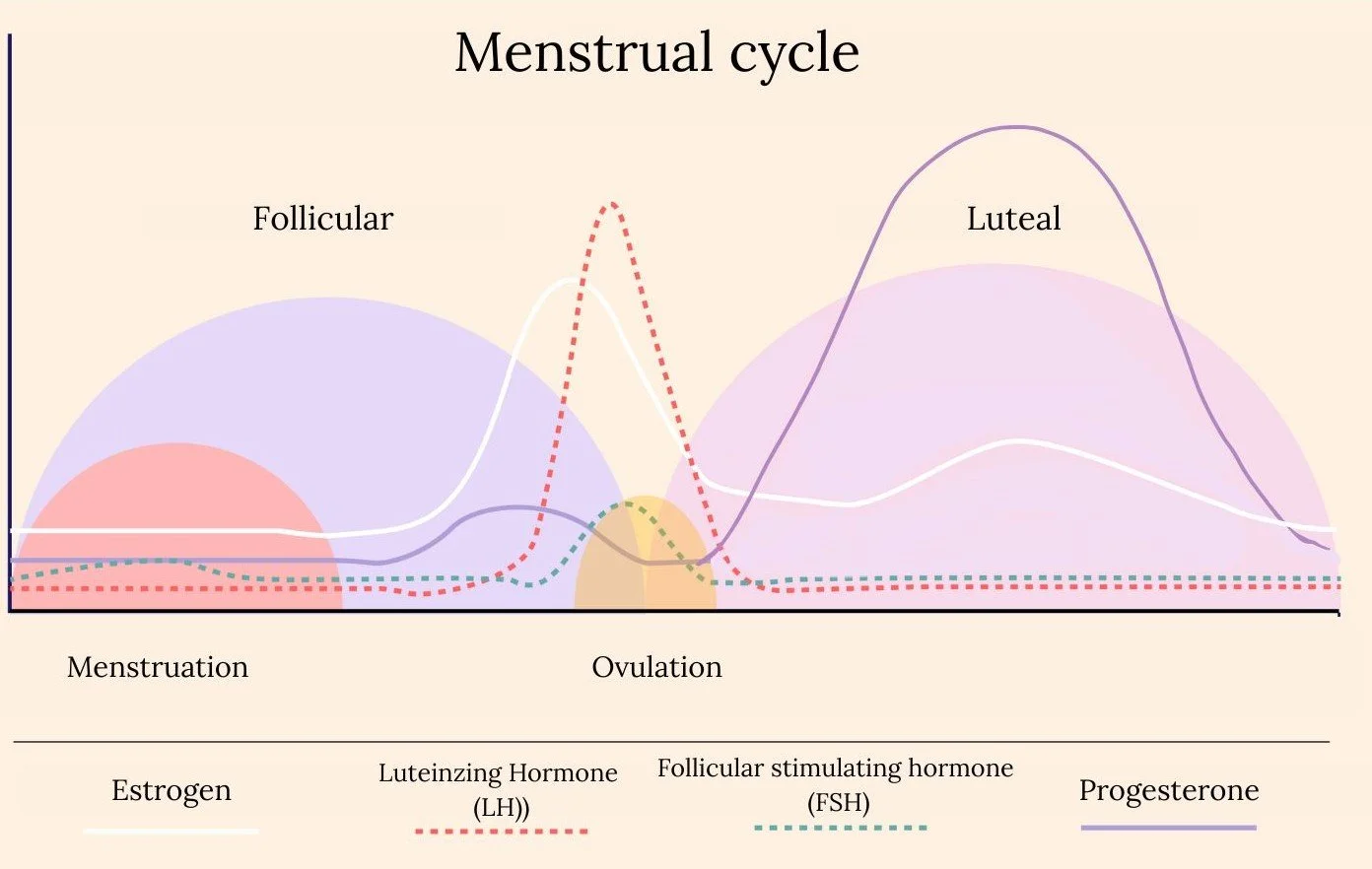
Now that we have an overview of what our hormones are doing, lets talk about how our hormones impact different areas of the body.
Impacts on cardiovascular health
Estrogen promotes vasodilation, widening blood vessels helping maintain blood pressure and circulation. It helps increase HDL (beneficial) cholesterol while lowering LDL (harmful) cholesterol). It helps contribute to the repair and integrity of blood vessel lining. Estrogen also reduces oxidative stress and inflammation in the blood vessels.
Progesterone in the luteal phase, helps relax the smooth muscle in the blood vessel walls, increasing blood flow and decreasing resistance. It modulates inflammation and has been found to influence coagulation (clot formation) and thrombosis (clotting incorrectly).
I even found research on how irregular cycle lengths (outside 22-34 day range) have been associated with cardiovascular diseases starting in 20 year olds. Which is wild because I had thought cardiovascular disease was something that happens when you get older. But this research showed it starts a lot earlier and our hormones can be one of the factors for it (5).
Impact on bone health
Our bone health is also impacted by our cycle. There are times in our cycle that our bones are broken down (resorption). This renewal is what strengthens bones by getting rid of fractured or brittle bone to make space for new bone formation.
In general, as estrogen levels drop in the follicular phase, bone break down is stimulated. Estrogen slows bone loss. The times in our cycle when estrogen is low is in our early follicular phase, from our period to mid follicular we are breaking bone down. As estrogen increases getting closer to ovulation, the bone breakdown rate slows down.
Progesterone, on the other hand, directly stimulates bone formation.
Meaning that we go from breaking bone down in the follicular phase, to make room for new bone cells to be developed in the luteal phase.
Which is where cycle tracking can be so beneficial, because we can track how long our luteal phase (progesterone) is. Ideally, our luteal phase should be 12-16 days long so we can build our bone cells back up.
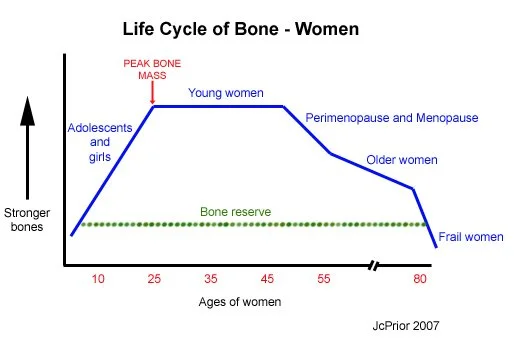
Our hormones impact on our bone health is why bone related issues become more common after menopause. Because we no longer have the ability to break old bone cells down to rebuild them. Other situations that can negatively impact bone health would be consistently longer cycles of 38+ days. Because that is more time we are spending breaking bone down while not rebuilding it.
Impact on breast health
One of the areas that you can more easily notice a hormonal impact, is on our breasts. Out of the other topics I’ve researched, breast health has been the hardest to find information on that doesn’t relate to pregnancy.
It’s frustrating because it’s framed as our breasts are “for” feeding babies. When our bodies are for ourselves, not anyone else. It’s like saying our arms are for handing things to someone else. This is where the evolutionary perspective really gets under my skin because we are fully conscious beings and our priorities go well beyond just reproduction.
The reason this is so important is that breast tenderness is a universal experience. Not everyone experiences it every cycle but it’s likely that at some point in time you’ll experience it. Becoming familiar with your anatomy is key to advocating for your health. Understanding what is normal or cause for a second opinion is crucial for our well being.
So let’s go into the cycle that our 🍒 go through.
The breasts are made up of mammary glands, connective tissue, nerves, lymph, and fatty tissue
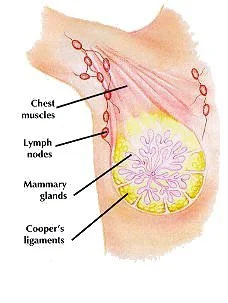
Breast volume is the overall size of the breast. Volume is influenced by fluid retention and hormonal fluctuations during the menstrual cycle
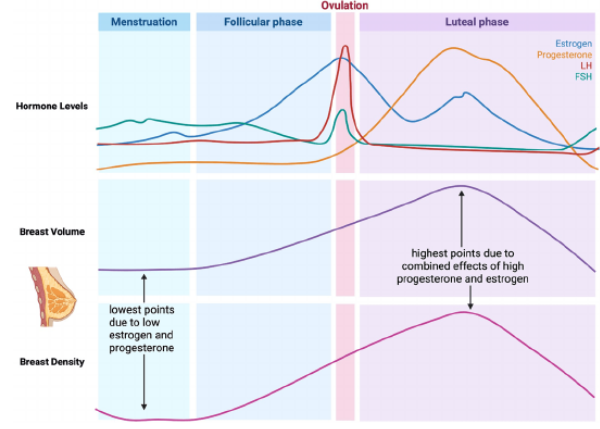
Breast density refers to the ratio between glands, connective tissue, and fat. This ratio changes from the follicular phase to the luteal phase. It also differs person to person and even cycle to cycle.
Estrogen:
Stimulate the mammary glands to elongate and grow. Increasing breast density and possible tenderness. Breast volume increases as estrogen rises. During ovulation, they are often at their most sensitive
Progesterone:
Stimulates the growth of lobular-alveolar structures. Progesterone promotes fluid retention, further increasing breast volume. Breast density reaches its highest point during the luteal phase due to the combined effects of estrogen and progesterone.
During the late luteal phase is when we are most likely to notice breast tenderness. Especially those that have higher estrogen levels in the luteal phase.
Another common occurrence is Fibrocystic breasts. Half of American women between the ages of 20 and 50 have fibrocystic breasts.It can cause breast pain, breast cysts and lumps in the breast. These changes are believed to be caused by rising and falling levels of hormones, especially estrogen, during the cycle due to cellular proliferation.
What to do with all that information
Now that we know why and when breast tenderness occurs, we can give our body a little extra love when it needs it. Doing lymphatic breast massages to help the discomfort. Taking hot showers. And doing breast checks around cycle day 5.
Doing a self breast exam after your period helps you have a baseline of what your breasts feel like before they change in size or structure. Doing them once a month is a good practice.
These are just a few examples of how our hormones impact our health. There are also impacts to our digestion, immune system, mental health, and probably more that we don’t even know about yet because this research is underfunded.
Echos of the past
This is a good example of how bikini medicine is still impacting how we understand our bodies today. Bikini medicine was the idea that we were just little men. That the only difference between the two genders was what gets covered by a bikini.
Which is completely false as we’ve just seen.
Pushing back on the idea that our hormones are just for reproduction is one of the ways we can highlight that our health matters more than what our bodies can do.
Especially now more than ever as reproductive justice and resources get cut and set back. For now we keep fighting.
Thank you for reading
Learn more about what cycle tracking is in this post