Do you need your period to be healthy?
I came across an interesting Tik Tok video a while back. This individual has been on birth control from the age of 18, she is now in her 30s. She explained that she didn’t take placebo pills or any breaks because they weren’t necessary. She went on to say that periods are only necessary for individuals that want to reproduce. That we can just opt out of them.
Which I totally get that sentiment. As someone that is childfree by choice I didn’t want to deal with periods either. But through my own struggle with PMS and hormonal imbalances, I learned that it’s not the full picture. We are taught very little about our bodies especially when it comes to our hormones and menstrual cycle.
The truth is that our cycle is so much more than just for reproduction
Let’s start off with how our hormones function
To better understand why our hormones are important for our overall health we first need to understand what these hormones are and what they’re doing throughout the cycle.
Menstrual phase
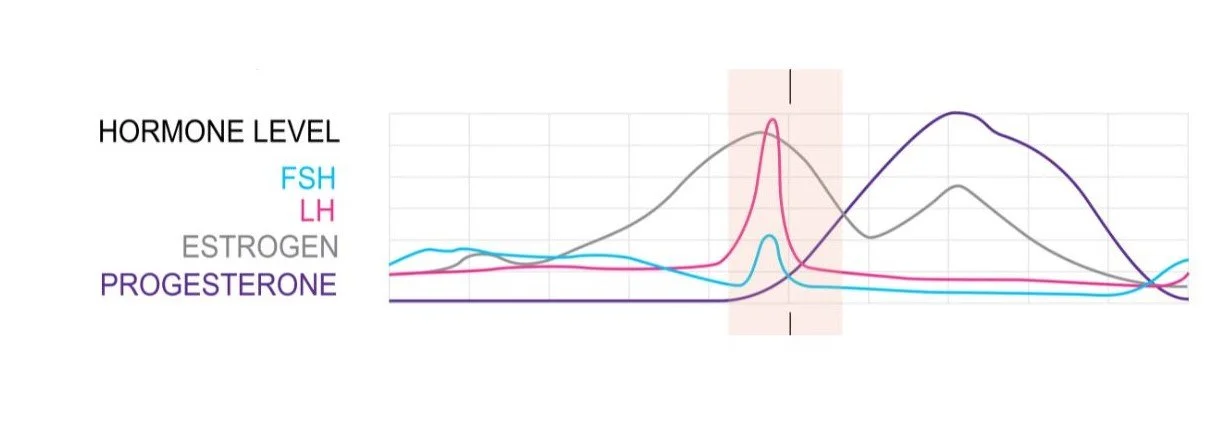
The beginning of the cycle is the one we’re most familiar with, our period. Our period is the time when the uterine lining is being shed. During this time our hormones, estrogen and progesterone are at their lowest.
Follicular phase
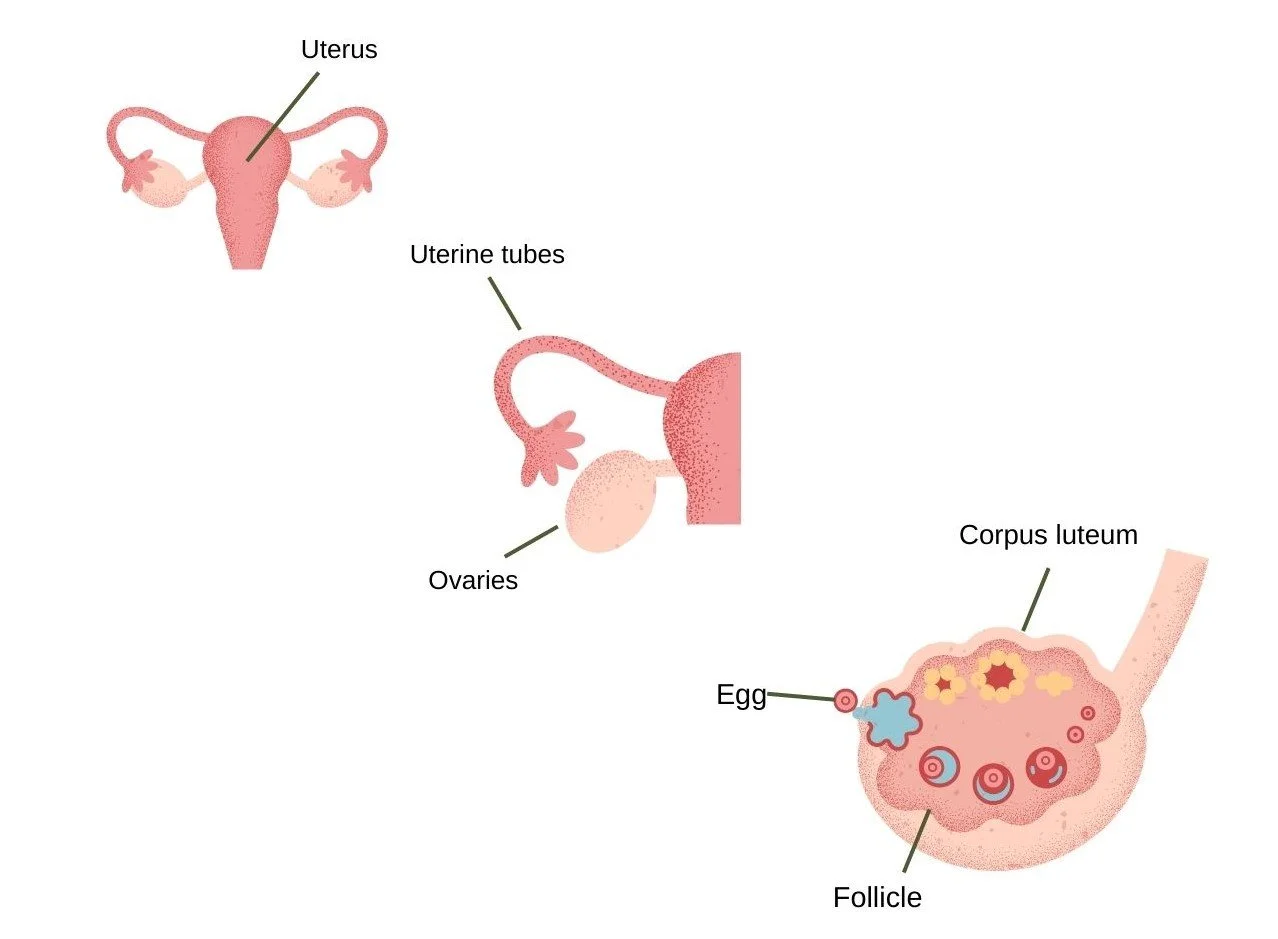
The follicular phase technically starts at the same time as our menstrual phase. Once menstruation has ended the ovaries start to get signals from the brain to start to produce estrogen. This is done through a hormone called FSH (follicular stimulating hormone). That’s when a group of follicles in our ovaries start to develop and produce estrogen. As they continue to develop, estrogen levels continue to rise.
Ovulation phase
During ovulation there is a chosen egg, the one who has matured the most, that gets ready to be released. The brain sends down more of the signaling hormones FSH and a new one LH (Luteinizing hormone) for ovulation to occur. We do naturally produce testosterone that also increases for ovulation. Once estrogen reaches the threshold there is an immune interaction that helps the egg rupture out of the ovary. Once the egg has ruptured it hangs out for up to 24 hours after which it gets reabsorbed.
Luteal phase
The follicle that is left behind then turns into a gland called the Corpus Luteum. This gland is then what produces progesterone and a small amount of estrogen. It will continue to produce progesterone for up to 16 days, in which it will break down and get reabsorbed. Once progesterone drops it triggers the uterine lining to shed and the cycle begins.
Impacts of our hormones outside our cycle
So now that we know how our hormones are made, and what happens in our cycle we can now dive into the original question of do we need a period to be health?
Our period is the result of estrogen building up our uterine lining and progesterone adding in vasculature and blood flow. Which means that to not have a period would mean that these two hormones aren’t functioning like they would be. The question then turns into do we need estrogen and progesterone?
The answer is YES
Estrogen and progesterone have been found to impact our bone, breast, cardiovascular, immune, and mental health.
Bone health
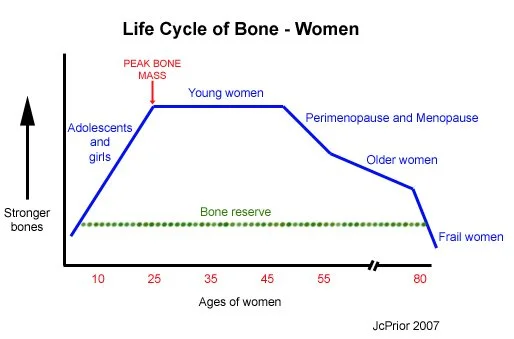
The biggest examples of how important these hormones are to our health is through our bone health. Our bone density is acquired from our teens to mid 20’s. Bone gets broken down in the follicular phase by estrogen. Then gets rebuilt through the influence of progesterone. This is known as bone remodeling (1). Without this interplay of hormones it can lead to weaker bones which is why bone fractures are more common after menopause.
Cardiovascular health
Cardiovascular disease is one of the leading health complications after menopause. Previous research has focused on estrogens impact on cardiovascular disease with minimal success using hormone replacement therapy. Newer research has shown that progesterone also has an impact on the cardiovascular system. Specifically the interaction with estrogen and progesterone. With some research showing that cardiovascular disease can start to show up from chronic irregular cycles as early as in our 20s (2).
The reason irregular cycles comes up here is because cycle length is mainly determined in our follicular phase. Our body needs to feel safe enough to move the resources necessary to ovulate. If our body has a higher demand of cortisol and adrenaline it will delay ovulation which leads to longer cycles. Longer cycles mean that more time is being spent in the follicular phase, producing estrogen. While progesterone has a set window from the Corpus Luteum, that starts to break down.
So our body doesn’t get the benefits of having an equal interaction between estrogen and progesterone. When we’re talking about having balanced hormones. We are referring to the length of time our bodies produce estrogen to be more or less equal to progesterone.
Mental health
Lastly we’ll cover mental health as another example of how our hormones impact our overall health.
Estrogen has a direct relationship with Serotonin. Serotonin being the feel good neurotransmitter. As estrogen increases so does our serotonin levels. Increasing feelings of motivation, optimism, emotional resilience, and higher energy levels are common. Increases in testosterone during ovulation can lead to increased energy and mood. While progesterone helps improve sleep and reduce anxiety. Which is why PMS symptoms are more common right before our period as progesterone starts to drop. There are those that seem to be more sensitive to these shifts in hormones that can experience a more severe form of PMS called PMDD (Premenstrual Dysphoric Disorder) where mood shifts can become debilitating. (4)
I would like to add here that this doesn’t mean that you should be feeling a certain way in one phase vs another. I think of these as generalizations or like archetypes. So if you feel more energy or motivation in a different phase that’s perfectly normal too. Each body is unique and different.
What this does show us is the impact that estrogen and progesterone have on our body.
It was previously thought that male and female bodies were the same besides our reproductive organs. This was known as bikini medicine. New research is starting to show how flawed that really was.
Now that we’ve gone full circle, we can see how the idea of our periods being obsolete is just plain wrong. Our periods are just one outcome of the interplay that estrogen and progesterone have on our body.
Our periods have a long history of being taboo, something shameful and dirty. When in reality they are integral to our health and well being. This is just another attempt to shame our body for just existing.
Understanding how our body functions is the first step to pushing back against this idea that sees mens bodies as default when they are not.
Thank you for reading
Want to learn more about your cycle?
Check out the Cycle Mapping course
References:
(1) Kalyan S, Prior JC. Bone changes and fracture related to menstrual cycles and ovulation. Crit Rev Eukaryot Gene Expr. 2010;20(3):213-33. doi: 10.1615/critreveukargeneexpr.v20.i3.30. PMID: 21175412.
(2) Huang, C., Lin, B., Yuan, Y., Li, K., Xu, B., Zhang, P., Wei, X., Wang, W., Liu, W., Deng, Y., Liu, D., Lin, J., Huang, Y., & Zhang, H. (2023). Associations of menstrual cycle regularity and length with cardiovascular diseases: a prospective Study from UK Biobank. Journal of the American Heart Association, 12(11), e029020. https://doi.org/10.1161/jaha.122.029020
(3) White, R. E. (2002). Estrogen and vascular function. Vascular Pharmacology, 38(2), 73–80. https://doi.org/10.1016/s0306-3623(02)00129-5
(4) Li D, Zhang L, Wang X. The Effect of Menstrual Cycle Phases on Approach-Avoidance Behaviors in Women: Evidence from Conscious and Unconscious Processes. Brain Sci. 2022 Oct 21;12(10):1417. doi: 10.3390/brainsci12101417. PMID: 36291350; PMCID: PMC9599574.